
[Real Wrinkle Care] No-Tox[Fundamental Wrinkle Improvement] NO Botox! Notox! Jaw, Forehead Wrinkles, Glabella Wrinkles, etc.
![[Fundamental Wrinkle Improvement] NO Botox! Notox! Jaw, Forehead Wrinkles, Glabella Wrinkles, etc.](/_next/image?url=https%3A%2F%2Ffirebasestorage.googleapis.com%2Fv0%2Fb%2Fkkeutguro-7e583.firebasestorage.app%2Fo%2Fproducts%252Fguro%252Fen%252F1758617569866_84662fb2-5c18-409f-8f9b-7abbb623c97a_001-copy-1-ezgif.com-png-to-webp-converter.webp%3Falt%3Dmedia%26token%3D3c3dfe99-ffe9-4761-979f-9b929d23b0fe&w=2048&q=75)
[Fundamental Wrinkle Improvement] NO Botox! Notox! Jaw, Forehead Wrinkles, Glabella Wrinkles, etc.
Fundamental effect with a single treatment. Forehead wrinkles, glabella wrinkles, periorbital and under-eye wrinkles * VAT separate
Options
Treatment Details
.png%3Falt%3Dmedia%26token%3D7b094bbb-bbe7-4b97-8657-7bf7f9480e43&w=1920&q=75)



NOTOX (NOTOX)
Most people first think of Botox treatment when wrinkles appear.
Botox is a treatment that helps to quickly alleviate wrinkles that form due to changes in facial expressions, such as on the forehead, glabella, and around the eyes.
that can help quickly alleviate them.
However, by temporarily relaxing the muscles,
it works by making wrinkles less pronounced,
but it cannot reverse the skin's own aging process.
'NOTOX' goes beyond simply reducing wrinkles,
aiming to fundamentally restore the skin's inherent structure.
If Botox is a treatment that 'temporarily restricts muscle movement',
then NOTOX can be described as a treatment that 'creates a healthy skin environment where wrinkles are less likely to form'.
───────────────
3 Key Factors for Wrinkle Improvement
1. Dermal Layer Regeneration
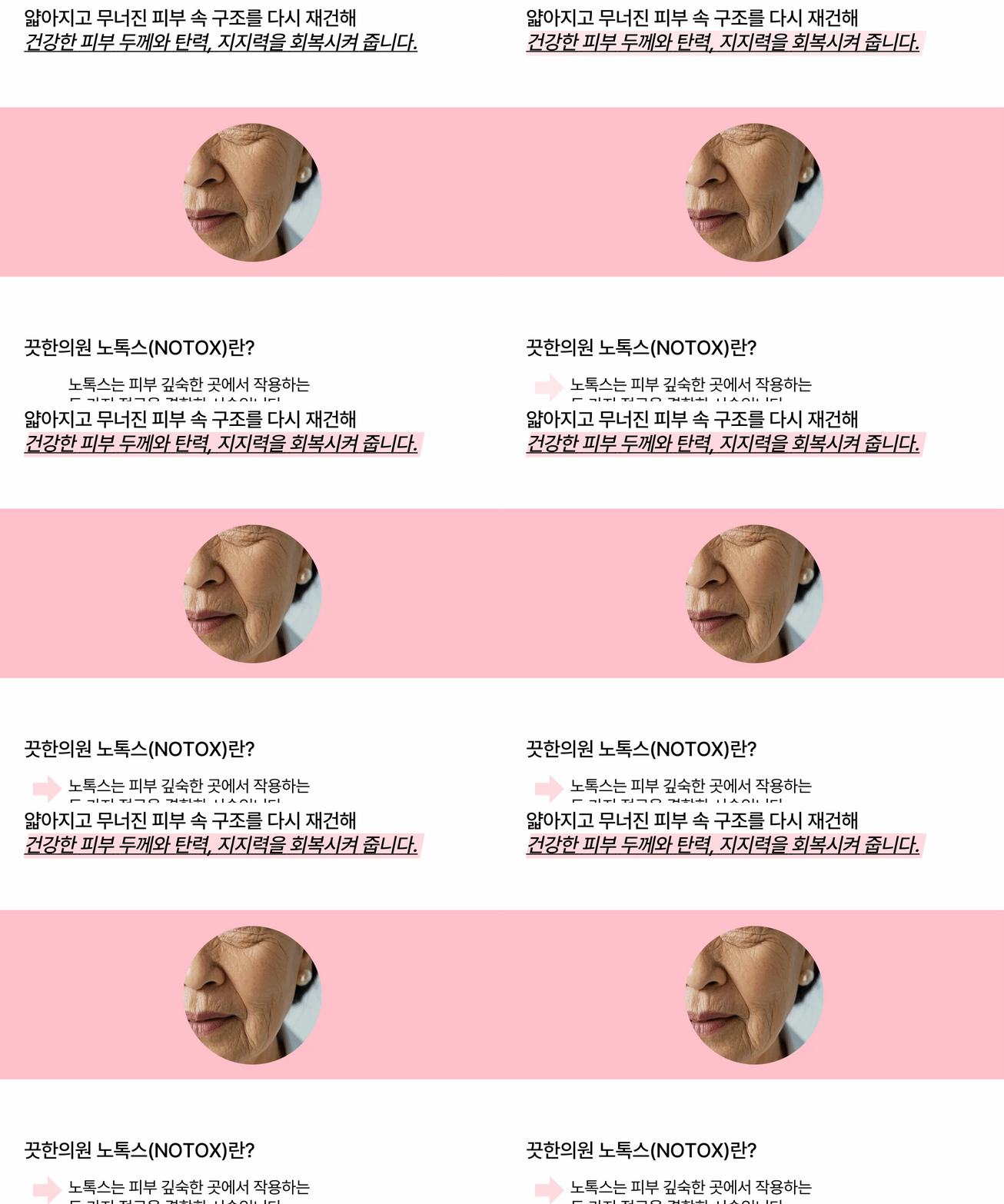
In most areas where wrinkles have formed, the skin's dermal layer is thin and weakened.
Restoring the skin to be healthy and thick is expected to lead to fundamental wrinkle improvement.
2. Collagen/Elastic Fiber Rearrangement
It helps to restore the skin's support by reorganizing the collagen and elastic fiber structures within the dermis that have broken down due to aging.
3. Strengthening Support
Areas that repeatedly fold require strong support from within the skin.
The skin's inherent 'elasticity' must be restored.
*Botox does not directly act on these three key factors.
Instead, by temporarily inhibiting the movement of facial muscles,
it is an 'external suppression method' that helps prevent wrinkle formation.
Therefore, the treatment effect may be temporary, and long-term maintenance may be difficult.
───────────────
Recommended NOTOX Areas
1. Forehead Wrinkles
This is an area where wrinkles can easily deepen due to repetitive facial expressions.
Repeated Botox treatments can potentially lead to drooping eyebrows or a somewhat rigid facial expression.
By restoring healthy skin thickness with NOTOX treatment, forehead wrinkles can be improved more naturally.
2. Glabellar Lines (Frown Lines)
This is a wrinkle area that tends to develop into deep, fixed lines.
Even after Botox treatment, fine lines may remain, or facial expressions may appear unnatural.
NOTOX treatment can help induce regeneration deep within the skin, softening the structure of wrinkle lines from within.
3. Fine Lines Around and Under the Eyes
This is an area where fine lines easily form due to thin and delicate skin.
Excessive use of Botox can make the outer corners of the eyes appear unnatural when smiling.
By using ingredients that aid dermal regeneration, it promotes skin recovery,
and by using ingredients that gently support the skin, very natural improvement effects can be expected.
4. Nasolabial Folds
Nasolabial folds often result not just from facial expressions, but also from a combination of sagging cheeks and reduced skin elasticity.
For this type of wrinkle, improvement may be difficult to achieve with Botox treatments alone.
NOTOX treatment helps to restore healthy skin thickness and improve the underlying structure that supports sunken volume areas.
5. Perioral Wrinkles
The area around the mouth is prone to wrinkles due to frequent movement and thin skin.
Botox treatments may carry a risk of unnatural facial expressions when speaking or smiling.
NOTOX treatment promotes skin regeneration and strengthens the supporting structure, allowing for natural expressions while expecting wrinkle reduction.
6. Sunken Area Below the Corners of the Mouth (Marionette Lines)
This area can become deeply indented as the skin thins along with fat loss.
Since these are static wrinkles that appear regardless of facial expressions, the effectiveness of Botox treatments may be limited.
We focus on utilizing regenerative ingredients and refining skin lines to enhance support.
───────────────
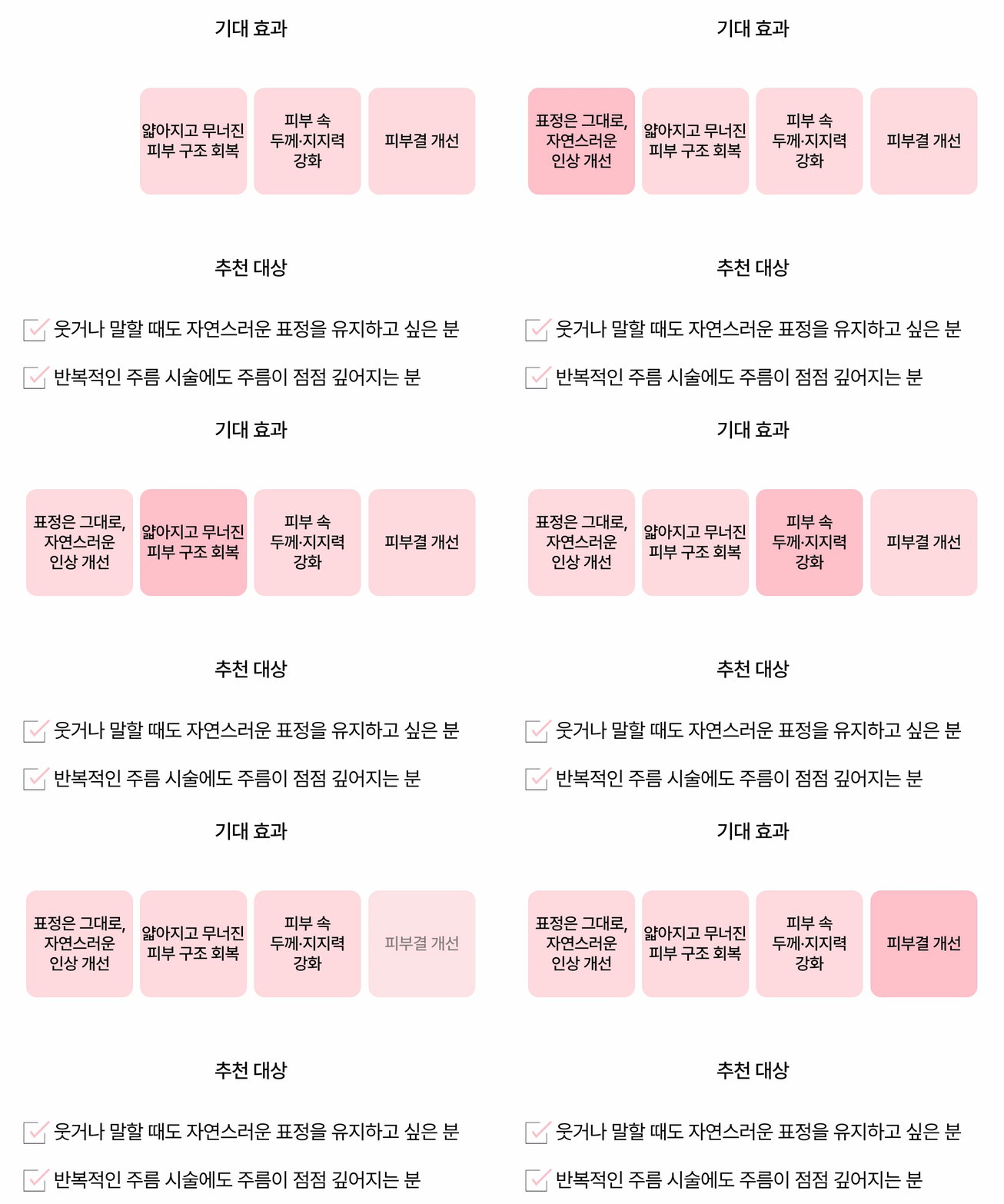
Recommended For
- 1. Those concerned about unnatural facial expressions after repeated Botox treatments
- 2. Those who are not satisfied with wrinkle improvement even after Botox treatments
- 3. Those who feel their skin is thinning and wrinkles are becoming progressively deeper
- 4. Those who desire long-term wrinkle management that prioritizes skin health rather than short-term changes
Treatment Flow
첫 상담부터 마무리까지의 실제 진행 순서를 확인하세요.
- 01
개개인의 피부 상태를 파악하기 위한 상담을 진행하고, 시술 부위를 정확히 확인합니다. 이후 클렌징 및 마취 크림 도포가 이루어지며, 정해진 부위에 노톡스 시술이 진행됩니다. 시술 후에는 안내사항을 숙지하시고 귀가하시면 됩니다.
Q&A
고객님들이 가장 많이 물어보시는 내용을 모았습니다.
What are the differences between Notox treatment and Botox?

While Botox temporarily suppresses muscle movement, Notox aims to reconstruct the skin's internal structure to form support. This method can achieve improvement while maintaining natural expressions, and there may be less burden regarding returning to daily life after the procedure.
When do changes start to appear after the treatment?
Approximately 3 weeks after the treatment, collagen production is induced, and changes may gradually begin to appear.
What is the recommended treatment cycle?
While it may vary depending on individual skin conditions, you can generally consider treatments at 3 to 4-week intervals.